Digitally Printed Buildings: The New Age of Architecture
In an era where technology is reshaping every facet of our lives, architecture is no exception. Imagine a world where homes and offices aren't built brick by brick but "printed" layer by layer, emerging from massive robotic arms in a matter of days. This isn't science fiction, it's the reality of digitally printed buildings, often referred to as 3D-printed architecture. As we step into 2026, this innovative construction method is gaining momentum, promising to revolutionize how we design, build, and inhabit spaces. At Livin Interiors, while our focus remains on crafting timeless and functional interior environments, we're fascinated by how such advancements in architecture could influence the way interiors are conceptualized and integrated. This blog dives deep into the world of digitally printed buildings, exploring their mechanics, benefits, real-world applications, challenges, and future potential—all from an informative lens to inspire your next design thought.
The Evolution of Digital Printing in Architecture
The roots of 3D printing trace back to the 1980s, when it was primarily used for rapid prototyping in manufacturing. However, its leap into architecture began in the early 2000s with pioneers like Behrokh Khoshnevis, who developed Contour Crafting, a technique for extruding concrete-like materials to form building structures. By the 2010s, companies like China's Winsun were making headlines by printing entire villas and office buildings, showcasing the technology's scalability.
Fast-forward to today: Advancements in materials science, robotics, and software have propelled digital printing into mainstream discussions. In 2025, projects worldwide demonstrated not just feasibility but also sustainability, with printers using recycled plastics, bio-based composites, and even lunar regolith for experimental habitats. This evolution reflects a shift from traditional construction's labor-intensive, waste-heavy processes to a more precise, automated approach. For architects, it opens doors to complex geometries that were once impossible or prohibitively expensive, blending form and function in unprecedented ways.
How Digitally Printed Buildings Work
At its core, digital printing in architecture involves additive manufacturing, where structures are built by depositing material layer by layer based on a digital model. The process typically unfolds like this:
- Design Phase: Architects use CAD (Computer-Aided Design) software to create a 3D model. This model is sliced into thin horizontal layers, much like preparing a blueprint for a printer.
- Material Preparation: Common materials include concrete mixtures enhanced with fibers for strength, geopolymers for eco-friendliness, or even thermoplastic composites. These are fed into a large-scale 3D printer, often mounted on gantry systems or robotic arms that can span entire building sites.
- Printing Process: The printer extrudes the material through a nozzle, following the digital instructions. Layers bond as they cure, forming walls, floors, and even intricate details like curves or lattices. Reinforcement, such as steel bars, can be integrated manually or automated in advanced setups.
- Finishing Touches: Once the shell is printed, traditional elements like plumbing, electrical wiring, and roofing are added. The entire process can take as little as 24-48 hours for a small house, compared to months for conventional builds.
This method's precision minimizes errors and allows for on-site customization, making it ideal for remote or disaster-stricken areas where speed is crucial.
The Benefits: Why Digital Printing is a Game-Changer
The allure of digitally printed buildings lies in their multifaceted advantages, addressing some of the construction industry's biggest pain points.
- Speed and Efficiency: Traditional construction is slow and weather-dependent. Digital printing slashes timelines dramatically, a home can be printed in days, not months, accelerating housing solutions in urbanizing regions.
- Cost Savings: By reducing labor needs (often by 50-70%) and material waste (up to 30% less than conventional methods), costs can drop significantly. For instance, a 3D-printed house might cost 20-30% less than a comparable traditional one.
- Sustainability: One of the most compelling benefits is environmental. Printers use only what's needed, curbing waste, and can incorporate recycled or low-carbon materials. This aligns with global pushes for net-zero buildings, reducing the industry's 39% contribution to CO2 emissions.
- Design Flexibility: Architects can experiment with organic shapes, parametric designs, and personalized features without the constraints of molds or forms. This fosters innovation, from earthquake-resistant structures to aesthetically unique facades.
These perks make digital printing not just a novelty but a practical tool for modern challenges like climate change and population growth.
Real-World Examples: From Concept to Reality
Around the globe, digitally printed buildings are moving from prototypes to lived-in spaces. Here are some standout examples that illustrate the technology's potential:
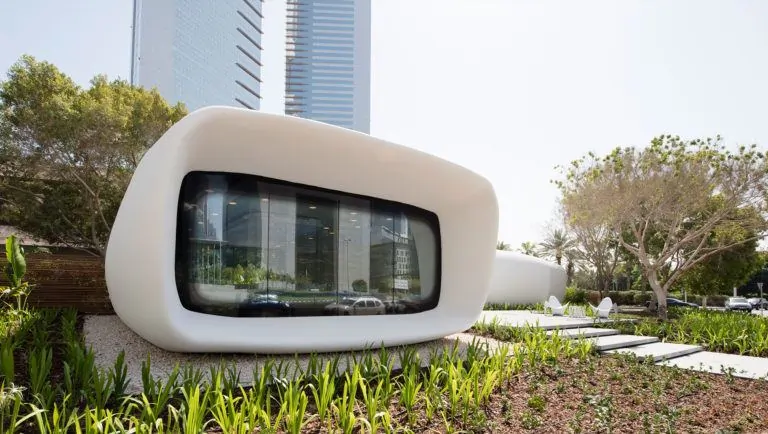
- Winsun's 3D-Printed Office in China: In 2015, Winsun printed a 1,100-square-meter villa and a five-story apartment block, but their Dubai office in 2019 showcased scalability with a two-story structure printed in just 17 days using recycled materials.
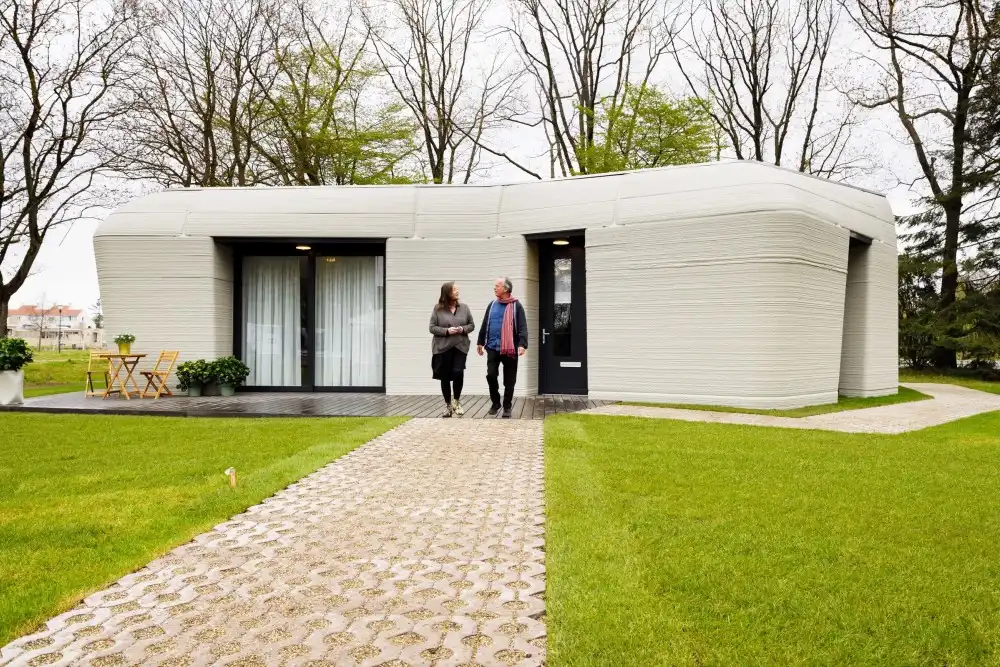
- Project Milestone in the Netherlands: This 2021 initiative by Eindhoven University printed Europe's first habitable 3D-printed homes, featuring boulder-like designs that blend seamlessly with nature. By 2025, expansions included multi-family units, proving residential viability.
- ICON's Community in Texas, USA: In collaboration with BIG architects, ICON printed a neighborhood of 100 homes in 2024-2025, each taking about a week. These energy-efficient structures incorporate solar panels and smart interiors, highlighting integration with modern living.

- Tvasta's Initiatives in India: Chennai-based Tvasta has printed affordable housing prototypes, including a 600-square-foot home in 2023, using indigenous materials to tackle urban slums.

These projects demonstrate how digital printing is already transforming skylines, with more ambitious endeavors like NASA's 3D-printed Mars habitats on the horizon.
Challenges: Hurdles on the Path to Widespread Adoption
Despite its promise, digital printing faces obstacles that must be addressed for broader acceptance.
- Material Limitations: Current materials, while improving, may lack the durability of traditional concrete in extreme conditions. Research into stronger, weather-resistant composites is ongoing.
- Regulatory and Standardization Issues: Building codes lag behind technology, requiring certifications for safety and structural integrity. In many regions, printed buildings still need hybrid approaches to comply.
- Scalability and Cost Barriers: Large-scale printers are expensive (upwards of $500,000), and transporting them to sites can be logistically challenging. Initial investments deter widespread use in developing markets.
- Skill Gaps: The shift demands new expertise in digital modeling and robotics, potentially displacing traditional laborers unless retraining programs are implemented.
- Environmental Trade-offs: While waste is reduced, the energy for printers and material sourcing must be green to truly claim sustainability.
Overcoming these will require collaboration between governments, tech firms, and architects.
The Future: What Lies Ahead in 2026 and Beyond
Looking ahead, 2026 could mark a tipping point. With AI integration for optimized designs and advancements in multi-material printing, we might see fully autonomous construction sites. Trends point to hybrid models combining printing with modular assembly, further cutting times and costs. In sustainable architecture, bio-printed materials from algae or fungi could emerge, pushing eco-innovation.
For urban planning, this means denser, greener cities with affordable housing. Globally, initiatives like the UN's Sustainable Development Goals could accelerate adoption in housing crises.
Bridging Architecture and Interiors in a Digital Era
Digitally printed buildings represent a bold step into the new age of architecture, where efficiency meets creativity to build a more sustainable future. While challenges remain, the benefits; from rapid deployment to environmental gains, position this technology as a cornerstone of tomorrow's built environment.


Comments
Post a Comment